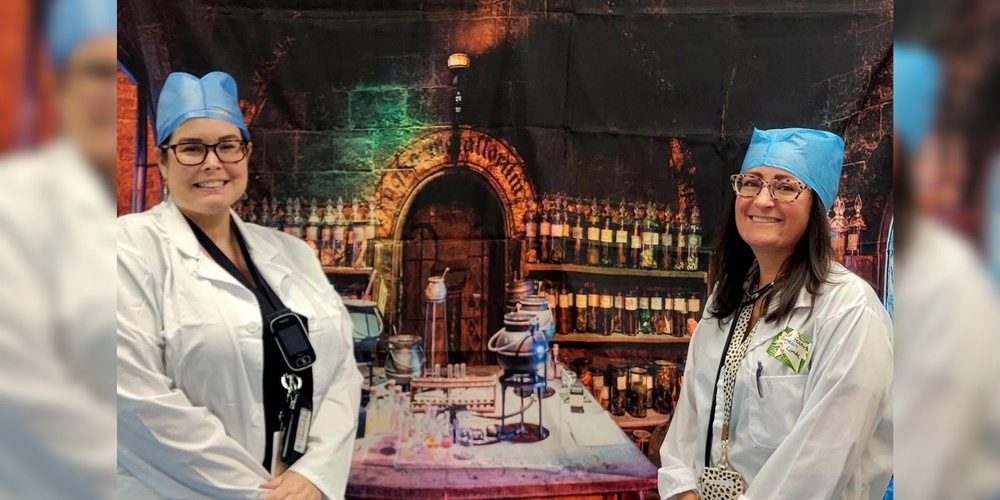
Fifth-grade students at Nolanville Elementary traded their pencils for surgical caps and their classrooms for operating rooms and science labs as teachers Penni Cannon and Tara Lomba transformed an ordinary school day into a hands-on learning experience across reading, math and science.
What began as an idea for “Text Feature Surgery” quickly grew into a full day of learning built around a medical and mad scientist theme.
“This really started as an idea from Tara. She typed in our team chat she planned to give her students masks and caps to do text feature surgery,” Cannon said. “I loved the idea and decided to join her.”
Within hours, the teachers were brainstorming ways to carry the theme throughout the school day.
“If I have learned anything from working on teams with Penni Cannon for years, it is that kids learn best when they are having fun,” Lomba said. “She is the queen of room transformations, and I love fun, so it was easy for me to jump in with both feet.”
For reading, students performed “Text Feature Surgery” using old Scholastic magazines. Students found different text features, identified their purpose, described the information they could learn from them and inferred why the author chose to include each feature.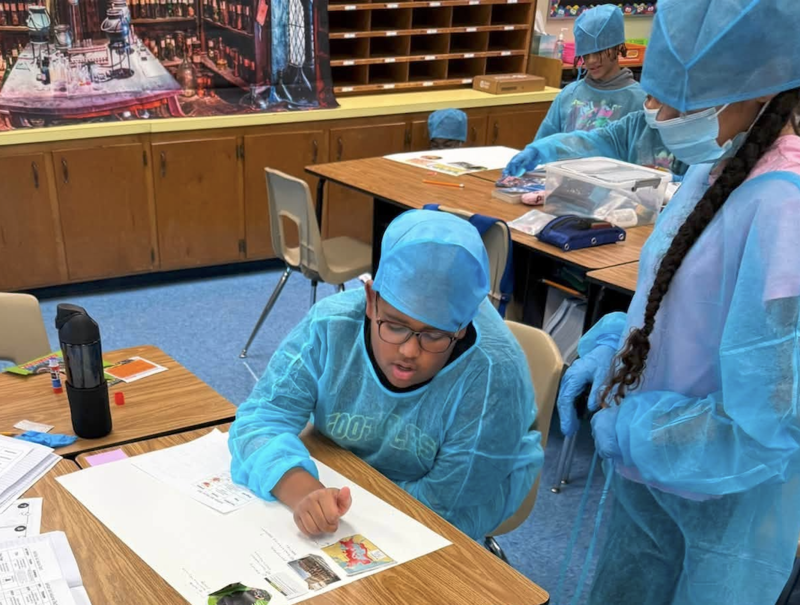
“We have found that students often ignore text features in favor of text. This can lead to students missing out on interesting and important information,” Lomba said. “Novelty can bring excitement to learning and create core memories for students, so we decided to introduce text features in a way that would stick with them.”
Rather than simply identifying the features, students worked with partners to discuss what information each conveyed and began asking their own questions about the articles.
“I loved hearing them start to question the author’s purpose and there were a few times they would even start to read the article to find answers to their own questions,” Cannon said. “They really started moving on to the next steps of connecting the information from the text feature to the article which gave them a ton of background knowledge for what we did the next day.”
Those conversations continued as students made discoveries together.
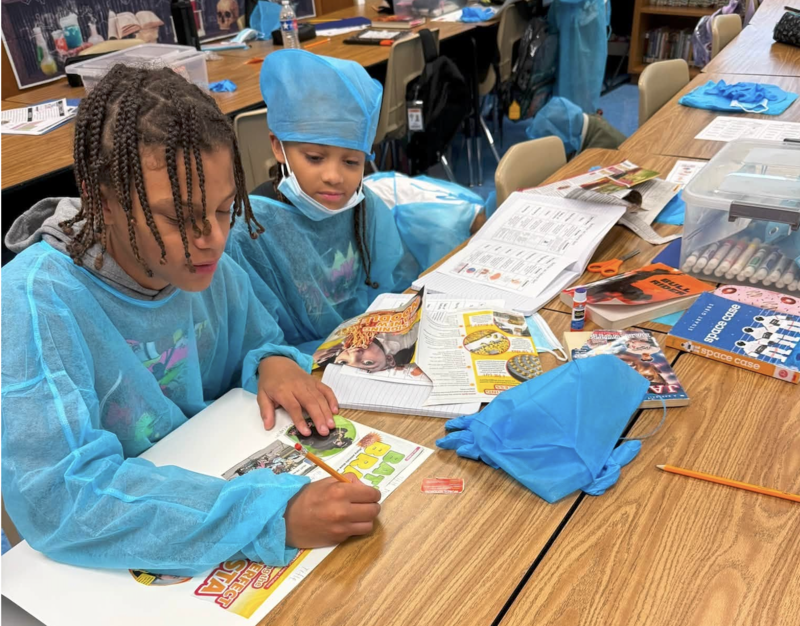 “You would hear students say things like ‘Oh…this is a diagram. I bet the article discusses this.’ And their partner would say something like, ‘I just saw it here! We should write this down,’” Cannon said.
The theme didn't end when reading was over.
In math, students had just begun learning about prime and composite numbers. Instead of simply finding factors and classifying numbers, students looked for a number's “symptoms” and then made a “medical diagnosis” to determine whether it was prime or composite.
“In science, we were doing a solubility lab, so I just changed the wording to make them mystery substances we were testing in our mad scientist lab instead,” Cannon said.
Because the teachers are self-contained and have the same students throughout the day, they were able to carry the experience from one subject to the next.
“This gave us the freedom to think of ways our students could keep up the fun in math and science in addition to the lesson for reading,” Lomba said.
Behind the surgical caps, masks, backdrops and mad scientist theme was a simple goal: help students engage with academic content in a way they would remember.
“We really want learning to be fun for our students,” Cannon said. “By adding a little bit of whimsy to our lessons, we changed the feel of the whole experience. If students are having fun while learning, they are more likely to remember the lesson. The more ways we can increase student enjoyment in learning, the better chance we have that they will master the content.”
That classroom learning is translating into measurable student success. During the 2025–2026 school year, Nolanville Elementary increased its Texas Education Accountability rating by 10 points, earning an overall score of 87. The campus also earned distinctions for Academic Achievement in Science, Top 25% Academic Growth and Top 25% Closing the Gaps.
For Lomba, the experience was also about creating the kinds of memories students will carry with them long after fifth grade.
“Our main goal is for students to internalize the lessons that we are teaching, but we also want to give them great experience. When they look back on elementary school, I want them to have fun and silly memories that will last a lifetime.”