
As America prepares to mark 25 years since the tragedy of 9/11, students are examining the facts of that day and considering the cost of freedom we all take for granted.
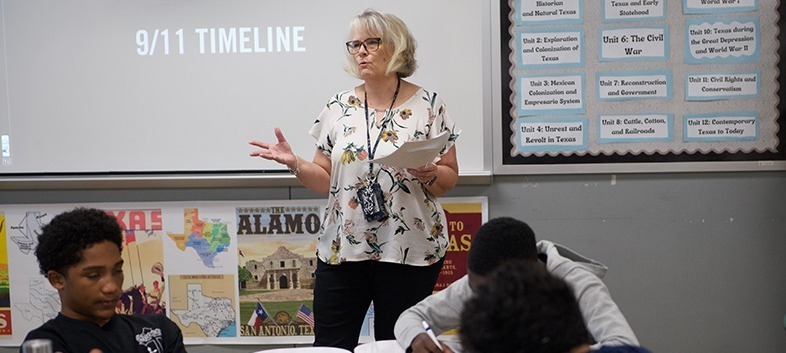
Social studies teachers in Killeen ISD are presenting to sixth-, seventh- and eighth-graders a lesson that lays out the timeline of that day and mixes interviews of eyewitnesses, working in discussion and reflective writing.
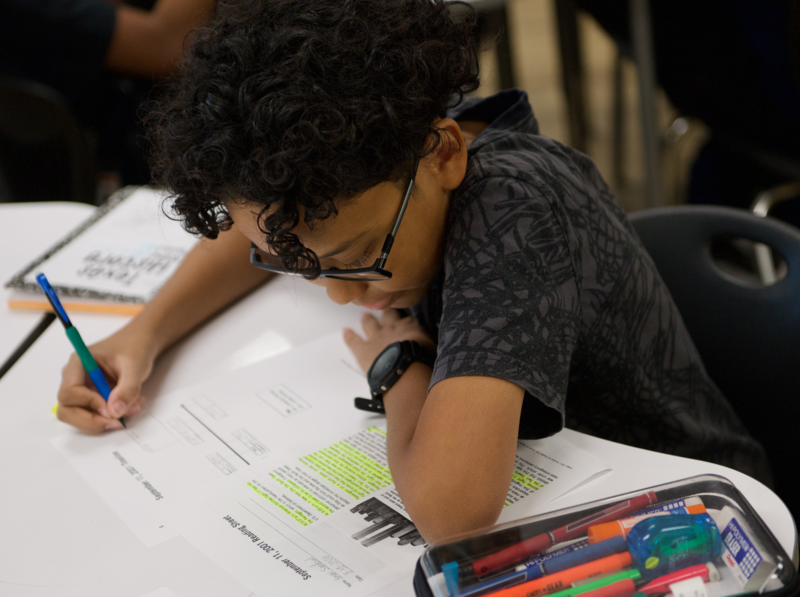 The 45-minute lesson concludes with an assignment to write an essay of at least four paragraphs that considers how the attack of September 11, 2001, affected the freedoms guaranteed in the US Constitution.
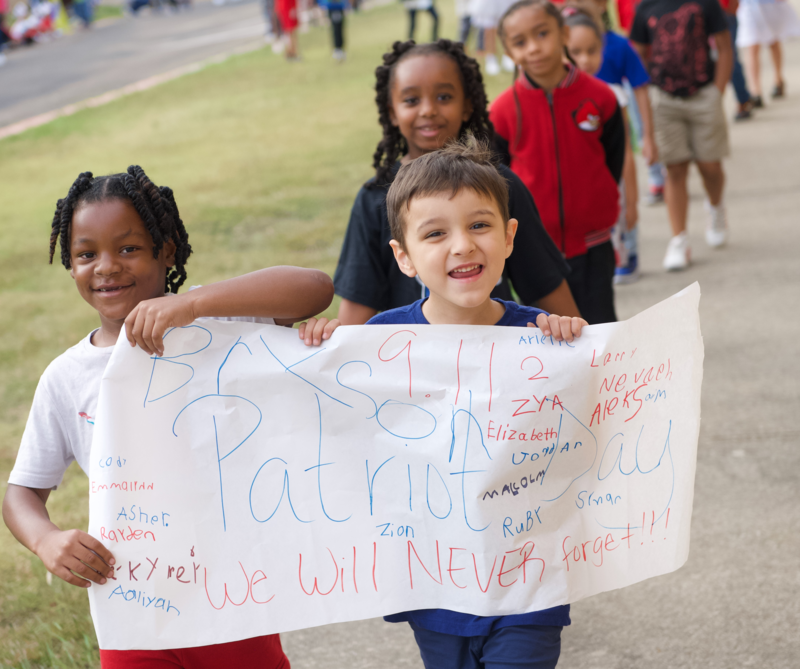
One of the essays will be presented at the KISD Freedom Walk scheduled on September 11 with a start time at 9:30 a.m. at Harker Heights High School. The winning student will be invited to read their work.
Angenet Wilkerson, executive director for community relations in KISD has overseen the annual freedom walk 10 years. This year will be the 20th anniversary of the local event, which brings together first responders and others from across the community.
This year the event focuses on student voices, Wilkerson said. It’s important, she said, for adults to understand how the younger generation looks at the tragedy that changed America.
 She turned to the district’s curriculum department and to Teaven Barnum, district instructional specialist for secondary history to come up with the lesson leading to the essay contest.
He decided to meld together a curriculum from a group called Tunnel to Towers with the state’s existing Freedom Week guidelines, which include the content of the nation’s founding documents.
The overall idea said Barnum is for middle school “students to understand that freedom comes at a cost. We have a responsibility to one another.”
At Union Grove Middle School, social studies teacher Taylor Loveless led students in her seven classes through discussions after seeing the video of testimony from firefighters and survivors from that day at the World Trade Center and the Pentagon.
They discussed the feelings people must have experienced charging into the burning towers to rescue people – determination, fear, uncertainty, anger.
 Loveless pointed out that many passengers messaged loved ones knowing they were not going to survive the ordeal unfolding in front of them.
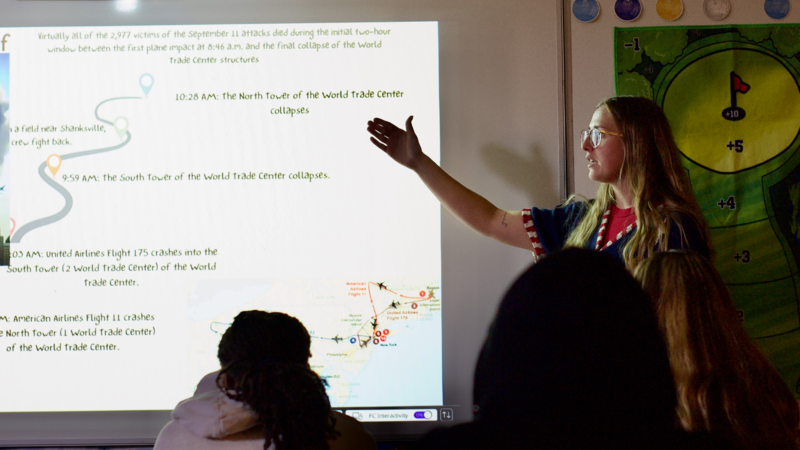
A big part of the lesson was a timeline that showed the first tower struck at 8:46 a.m., the plane crash in Pennsylvania at 10:03 and the two building collapses at 9:59 and 10:28, a total of less than two hours.
It took less than two periods in a middle school schedule for 2,977 people to die in four plane crashes.
Loveless also shared the story of a canine that was part of the massive search effort in New York City. That detail helped her explain the unifying effect of what happened that day.
“There is power in unity,” said Wilkerson. “We were the United States and not the divided states. It brought the nation together.”
Six years into teaching, Loveless said it’s important for students to see how throughout history tragedy has a unifying effect, often prompting a population to band together and to build patriotism.
As students hear from primary sources the way the tragedy affects them, it makes them consider more deeply the personal nature of historical events.
“I hope they walk away with more sensitivity toward people,” the teacher said. “You never know what people are going through. Hopefully, they will walk around with a little more empathy.”
Smith Middle School social studies teacher Deborah Spulick started teaching eight years ago after raising her children and serving in the US Army.
The tragedy and unifying effects of that day 25 years ago helped convince her to join the military, which she had considered doing for many years.
She likes to share parts of her experience serving in the Middle East post-911, a time she remembers fondly when she was able to help Afghan people by trying to make their villages safer.
“They need to understand why we’re teaching about it and understand who is responsible for what happened and what followed,” Spulick said.
Students generally show curiosity and want to know more, the teacher said.
“The further we get from it, the more they are in danger of forgetting. We have to understand what happened. Our history makes us who we are.”
Photos from 911 lessons taught recently at Smith and Union Grove as well as a folder of photos from past KISD freedom walks are posted at www.killeenisd.org/photos